Net billing in Nigeria, what it means for businesses that generate their own power
Most Nigerian operators hear net billing and picture a cheque from the utility. The reality is narrower, slower and still worth designing for.
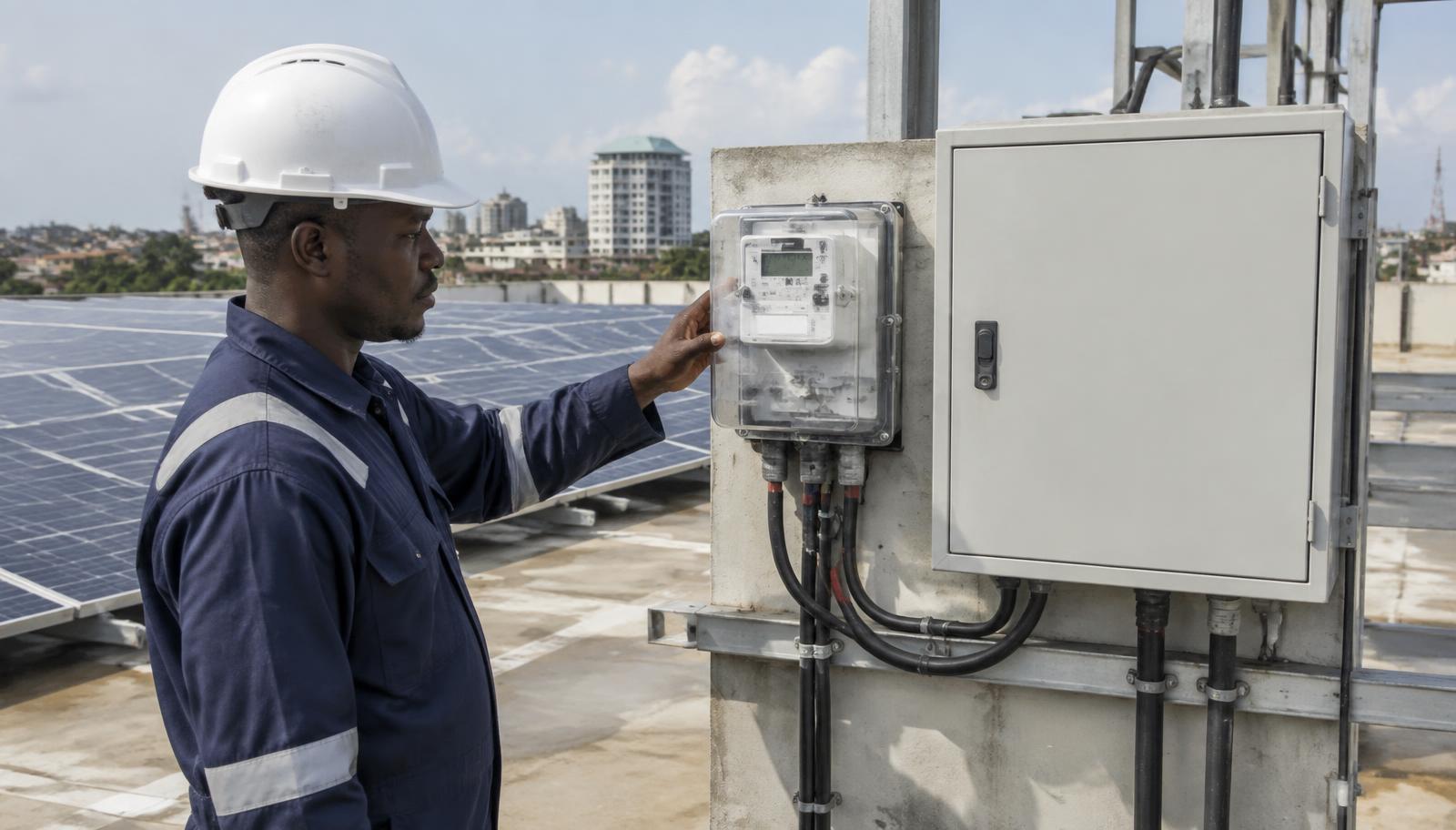
Net billing is simple in principle. You generate your own electricity, you use what you need, and any surplus that flows into the distribution network is credited against what you buy. Net metering is the closer cousin, where the meter effectively runs both ways and the credit is in units rather than naira.
In Nigeria the principle exists on paper, the practice is uneven, and the commercial value is rarely the reason to build. This piece sets out what a commercial or industrial operator should actually plan for.
What the rules allow today
Nigeria has a metering and embedded generation framework that contemplates customers exporting power to a distribution company. Implementation sits with each DisCo, and with the state regulator where electricity market oversight has moved to state level.
In practice that means three things for a business:
- Export arrangements are negotiated locally, DisCo by DisCo, not applied automatically because you installed solar.
- Bidirectional metering, protection settings and a signed interconnection agreement are prerequisites, not paperwork you add later.
- Credits usually offset your own consumption. Do not plan a business case around being paid cash for surplus.
Why the design matters more than the tariff
A well sized system for a Nigerian factory rarely exports much anyway. Load is high, daytime demand is strong, and storage absorbs the midday peak that would otherwise spill. The money is in displaced diesel and avoided downtime, not in export credits.
What net billing changes is the design brief. If you want the option later, you build for it now: grid tied or hybrid inverters with export control, anti islanding protection, a metering position the DisCo will accept and documentation that matches the installed plant.
The cost of retrofitting export capability
Retrofitting is the expensive route. Swapping inverters, re-terminating the point of common coupling, re-doing protection studies and re-applying for interconnection typically costs a multiple of what it would have cost to specify correctly at the start.
The cheap version of readiness is mostly paperwork and headroom: correct inverter class, spare ways in the switchgear, cable routes and a single line diagram that a DisCo engineer can read.
A realistic sequence
For most C&I sites we work on, the order that holds up is:
- Cut diesel first with solar and storage sized to the real load profile.
- Meter and monitor properly so you have twelve months of credible generation and consumption data.
- Open the interconnection conversation with your DisCo once you can evidence what you export and when.
- Treat any credit you secure as upside on a business case that already worked without it.
Net billing in Nigeria is worth being ready for and unwise to depend on. Build the system around your own consumption, keep the export door open in the engineering, and let the regulatory position catch up on its own timetable.
Our C&I readiness assessment covers export capability, metering position and interconnection documentation alongside load and storage sizing.
Discuss this with our team.
For project briefings, RFPs, partnerships and pilot deployments.