
The cost of energy poverty, what unreliable power takes from African business
Energy poverty is usually described as an absence. It is better understood as a bill, paid daily, by people and businesses who can least afford it.
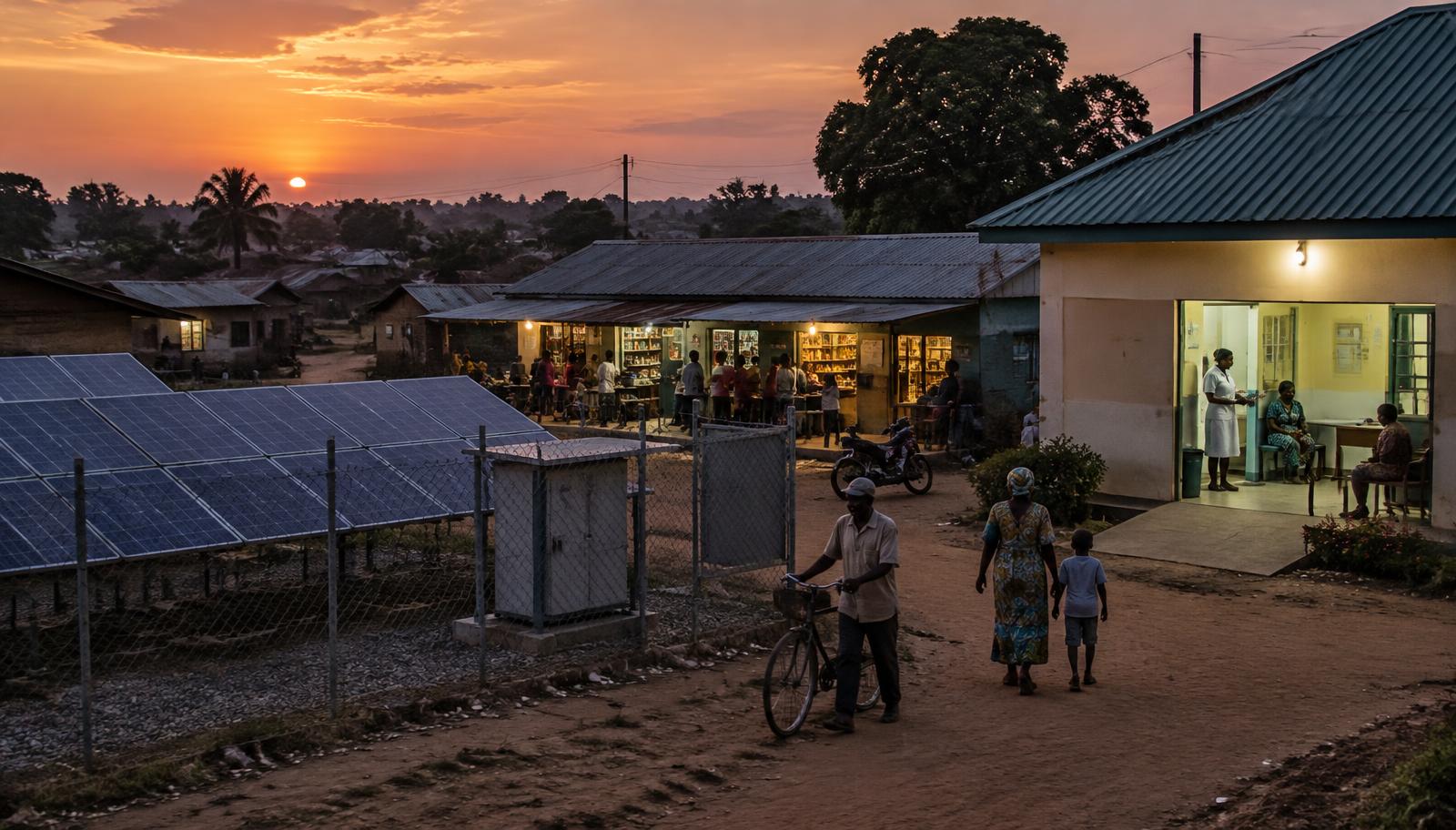
Around six hundred million people in sub Saharan Africa live without reliable electricity. The number is quoted so often it has stopped meaning anything. What it describes, in practice, is a clinic that cannot refrigerate vaccines, a workshop that cannot run a lathe after four in the afternoon, and a student who reads by phone light.
For business the same absence shows up as a cost line. Nigerian firms routinely spend more on self generation than on the grid supply they are billed for.
Where the money actually goes
The visible cost is diesel. The invisible costs are usually larger and rarely tracked in one place:
- Fuel, delivery, theft and storage losses.
- Generator maintenance, overhauls and early replacement from running under load all day.
- Spoiled stock in cold chain, food processing and pharmacy.
- Idle labour during switchover and outage, paid for regardless.
- Equipment damage from poor power quality and repeated hard starts.
- Lost orders and reputation when delivery dates slip.
Why it compounds
Expensive power caps the size of the business. A processor that cannot run a second shift cannot justify the machine that would make the second shift profitable. A clinic that cannot guarantee refrigeration cannot hold the stock that would bring patients in.
Energy poverty is therefore not only a household condition. It is a ceiling on industrialisation, and it is why distributed generation is an economic argument before it is an environmental one.
What changed in the last five years
Two things. Solar module prices fell far enough that generation is no longer the constraint, and lithium iron phosphate storage became cheap and durable enough to shift daytime generation into the evening at industrial scale.
Together they make distributed power competitive with diesel on cost, and superior on reliability, for a very large share of African commercial and industrial load. That was not true a decade ago.
What still gets in the way
Financing structure, not technology. Many operators can service a monthly energy payment but cannot fund capital expenditure, which is why power purchase and energy as a service models matter as much as engineering quality.
The second obstacle is delivery capacity. Equipment is available to anyone with a letter of credit. Installing, commissioning and maintaining it properly in Nigerian conditions is the scarce skill, and it is why we build with an established local EPC partner rather than around one.
Energy poverty ends site by site, community by community, not in a single announcement. Every factory that stops burning diesel and every clinic that keeps its fridge cold overnight is a real subtraction from the total.
That is the work we are doing across Nigeria, and the reason we measure progress in facilities delivered rather than megawatts announced.
Discuss this with our team.
For project briefings, RFPs, partnerships and pilot deployments.